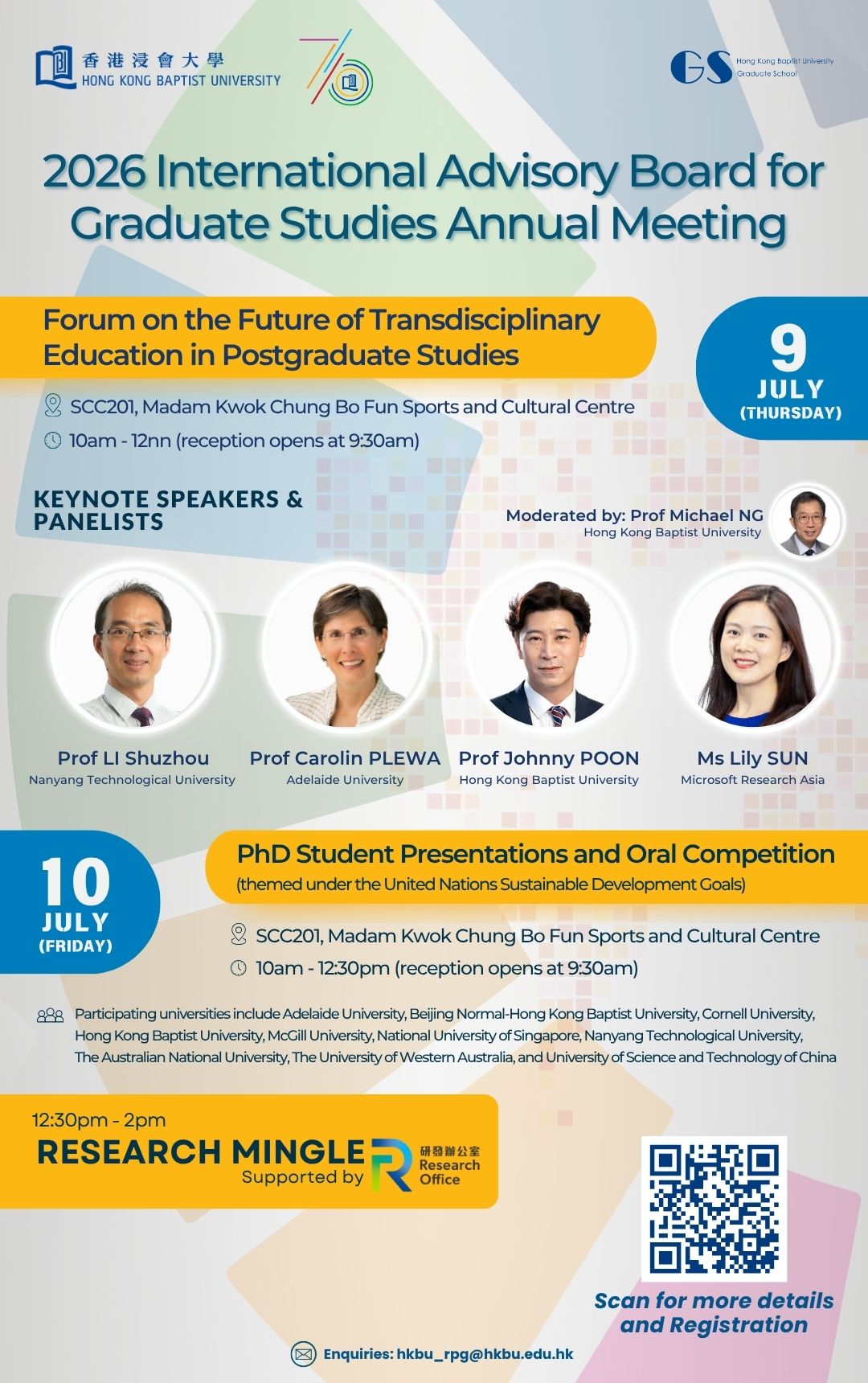
2026 HKBU International Advisory Board for Graduate Studies Annual Meeting
Introduction:
Established in 2022/23, the HKBU International Advisory Board for Graduate Studies (IAB) comprises 12 members, including 11 leading universities from 6 countries and Microsoft. It aims to advance doctoral education, foster collaborative research training opportunities, and promote global best practices in research training. Members of the IAB meet annually to share best practices and forge cross-institutional collaborations in doctoral education and research training. The 2026 Annual Meeting, themed “The Future of Transdisciplinary Education in Postgraduate Studies”, will take place on 9–10 July 2026 at HKBU.
|
|
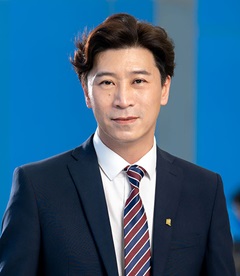
Keynote Speaker: Prof Johnny M POON Biography:
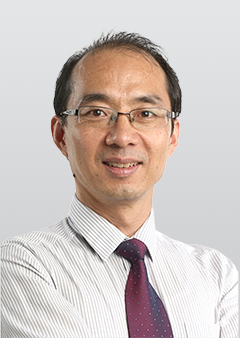
Keynote Speaker: AI-augmented material discovery Prof LI Shuzhou Abstract: With the rapid progress in artificial intelligence, the whole progress of material discovery is greatly accelerated. At the same time, this transformation is driving a more interdisciplinary mode of postgraduate training, where PhD students integrate knowledge from materials science, data science, and chemical engineering. We have applied artificial intelligence techniques to optimize synthesis of single-atom catalysts and material discovery, with students trained to bridge computational modelling and experimental implementation. Traditional trial-and-error methods for optimizing catalyst synthesis are time-consuming and costly, exploring only a small fraction of the vast combinatorial space. We use machine learning (ML) to assist the construction of Fenton-like single-atom catalysts (SACs). Our approach can efficiently extract synthesis parameters that exert a substantial influence on Fenton activity and accurately predict the phenol degradation rate k of SACs with a mean error of ±0.018 min−1. To further overcome the constrain of well-selected initial datasets, we integrate an active-learning-derived algorithm, the adaptive learning genetic algorithm (ALGA), into experimental workflows to optimize the synthesis of Fenton-like SACs. This interdisciplinary framework requires students to combine algorithm design, data analysis, and laboratory validation in a closed-loop process. Our results show that the closed-loop ALGA framework effectively learns from limited and sparse datasets, greatly reducing the research cycle compared to traditional ML and AL frameworks. By iteratively retaining better-performing genetic information and proactively expanding the search space through mutation and crossover, ALGA identifies the highest-performing Fenton- like Cu SACs with less than 90 experiments. Machine learning accelerates material discovery which includes selection of candidate small molecules and polymers for high-efficiency organic photovoltaic (OPV) materials. In this context, PhD students develop interdisciplinary competencies by integrating data-driven models with physics-based simulations. However, conventional machine learning models suffer from data scarcity for conjugated oligomers, crucial for OPV material production. To address this challenge, we apply transfer learning within a graph neural network to reduce the data requirement while accurately predicting the electronic properties of the conjugated oligomers. An original candidate dataset of 3710 conjugated oligomers was constructed for materials discovery, and a high-throughput screening pipeline was developed by integrating the models with density functional theory. This pipeline effectively identified 46 promising conjugated oligomer candidates, showcasing its effectiveness in accelerating the discovery of advanced materials for organic photovoltaics. More broadly, this work highlights how interdisciplinary, AI-driven research environments can simultaneously advance scientific discovery and equip postgraduate students with the integrated skill sets needed to address complex, real-world challenges. Biography: I am interested in exploring various properties of nanomaterials by theoretical and computational tools. Currently, my research will focus on three directions: (1) design catalysts for energy-conversion-related reactions; (2) degradable polymers; and (3) optical properties of metal-semiconductor nanostructures. 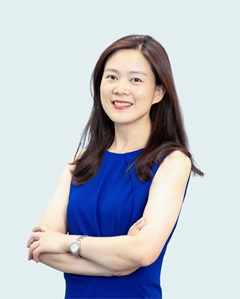
Keynote Speaker: From Training Researchers to Cultivating AI-Native Innovators—— Rethinking Graduate Research Training in the Age of Human–AI Collaboration Ms Lily SUN Abstract: Biography: Lily and her team are responsible for crafting and executing strategies that attract, develop, and retain diverse, high-quality talent for MSR Asia. Their efforts include flagship programs such as the Stars of Tomorrow Internship, StarTrack Young Visiting Scholars Program, Joint PhD Program, StarLeap Program, StarBridge Program, and PhD forums. They also lead research acceleration across themes like the MSR Asia Theory Center, AI for Education, AI for Cultural Heritage, Societal AI, AI for Sustainability, and AI for Healthcare, promoting cross-disciplinary and cross-boundary innovation. As a passionate advocate for diversity and inclusion, Lily founded the Microsoft Ada Workshops in 2016, fostering collaboration between academia and industry to empower the next generation of female tech talent. She serves as an executive member of the Women Branch of the China Computer Federation and co-chair of the Women at Microsoft Greater China Region. Lily holds an M.S. in Engineering and a B.S. in Science from Peking University.
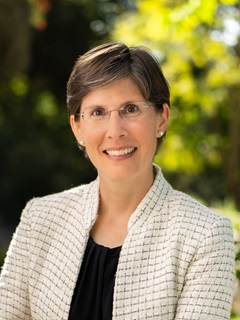
Keynote Speaker: Transforming Together: Building a Connected Future of Graduate Research Training Prof Carolin PLEWA Abstract: Indeed, graduate research lies at the nexus of universities’ key roles: discovery and innovation—enabling people to imagine and shape the future through research that is connected and applied for positive change; human and social capital—preparing learners for diverse opportunities as responsible, motivated citizens ready to question and contribute; global futures—fostering collaboration across borders and inspiring globally engaged citizens; and social futures—serving as anchors for communities, offering stability and inspiration while advancing societal priorities such as the Sustainable Development Goals. To harness these opportunities requires a continued evolution of the graduate researcher experience and environment. Beyond the pursuit of excellence, our graduate researchers deserve an experience grounded in connection, collaboration, and community. By strengthening connection between graduate research and society, prioritising collaboration across disciplines, sectors, and nations, and fostering inclusive research and innovation communities, we can broaden participation and enable every graduate researcher to realise their full potential. In doing so, we move towards a more connected, confident, and valued research and innovation community — one that not only advances knowledge but actively shapes a future in which research and innovation are valued, shared, and deliver meaningful societal impact. Biography: |
|
A total of 20 student participants from HKBU will present their posters on 10 July 2026 (Friday) to compete in the Poster Presentations. All the presentations in both competitions are themed under the Sustainable Development Goals of the United Nations, and students will be competing for the Best Presentation Awards in their respective categories, based on the on-site voting. |
|
This session brings together outstanding supervisors and PhD students from the School of Business, School of Communication, and Faculty of Arts and Social Sciences to share insider stories on driving research impact. More details HERE. |
|
All staff and students are welcome to register HERE.
Registration is required for the Forum on The Future of Transdisciplinary Education in Postgraduate Studies, PhD Student Poster Presentations and Oral Competition, and Research Mingle.
Seats are limited and offered on a first-come, first-served basis.
For enquiries, please contact the Graduate School at hkbu_rpg@hkbu.edu.hk.
|